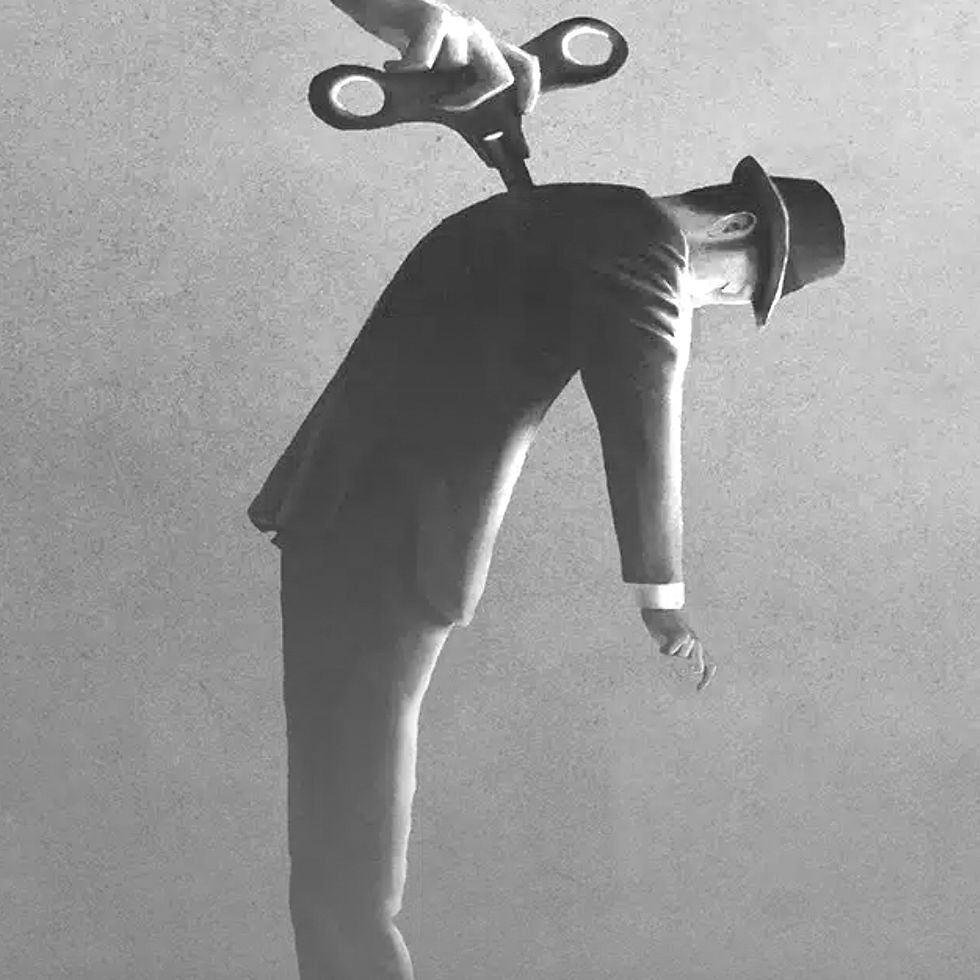
When concern becomes control
- Jul 24
- 6 min read
Updated: 1 day ago

Somewhere, right now, a figure is sat at a kitchen table before dawn. The house is silent, the coffee beside them is a warm version of hot, and the only light is thrown by the open window of a glowing laptop. The rest of the house is fast asleep... I imagine them being tired. Not because they manage their time poorly, or enjoy working silly hours, but because this piece of personal sacrifice, was the only way to protect something else.
Perhaps they promised the afternoon to hang out with family, or talk, or walk or just reconnect. Perhaps all of the above.
So they made an accommodation. They borrowed an hour from the insufficiencies of their sleep to honour an obligation to something of importance.
Most of us have done it. We carve our efforts into the margins of the day - the early mornings, the late nights, the hours that most people are happy to leave sat on the bench. Because the rest of the day has already been given to people, places and things that matter. It's not ideal and it isn't sustainable forever, but for a brief season, it can work.
And then someone notices.
"Why are you up at this hour?" "You shouldn't be doing that." "Why push yourself so hard?"
And thus, the comments arrive. Dressed in clothes of concern that don't quite seem to fit the wearer. As if TLC was the look they were going for, often quite genuinely, but in reality, the outfit is woven from the threads - not of concern - but of correction.
Correction has a dominant character flaw: it forgets to ask what problem the early riser was trying to solve. Suddenly, the early rising becomes the issue, not the reason behind it. The sacrifice becomes the problem, not the thing the sacrifice was trying so hard to achieve.
The effort and the energy - the whole 9 yards, is handed back to you as evidence that something is wrong with you. You picked up an awkward, but ultimately accommodating boulder, so that two important things could both survive, only to discover that everyone wanted to pitch critical advice about the shape of the rock, rather than to ask about the weight of what you carry.
That, I think, is where the sting lives. Not in the critique itself, as criticism is just a part of life. The sting comes from being asked to defend your mindfully crafted solution, by people who can't be bothered to understand your dilemma in the first place - and, if we are honest, by people who have never really risked enough to be considered tired themselves.
Because here is the part we are usually too polite to say aloud. Not all of this is concern, and Ok... a little of it is love. But most of it is just the mirror.
When someone close to you judges your efforts without solicitation - "You work too hard.." or you "charge too little"... that you basically rise in the dark to chase a life you actually want, the family of critics don't experience your effort as neutral. It presses on something in them. It's a trigger.
If you appear to be busting your ass, and they long ago made their peace with just sitting on theirs, then your striving quietly turns their stillness into a choice. Something they might have to look at in the discomfort of the mirror. Something they might have to defend. And so, "Why are you working so hard?" stops being a question. It becomes a thinly veiled complaint.
Translated literally and honestly it says: "Your effort makes my lack of effort way too visible, and I would rather you stopped all that, so my choices are not so brightly lit".
OK... so that is the cold version, but nonetheless, it is damned-near impossible to argue with, because it wears the costume of care so well. Resist it and you are ungrateful. Defend yourself and you are told you're being defensive or over-sensitive or you misunderstood... The noose is knotted so that you struggling, only draws it tighter.
It doesn't just apply to the management of working hours - of course not. Mention that you're driving to Paris via Chantilly, and someone will tell you to take a different route. They have no interest whatsoever in the fact you may actually want to stop in the cream capital of France...
Say you've decided to keep your fees reasonable and they will suddenly see theirs as not. "If I was you..." becomes a subtle threat. Announce a change of direction and hear that it sounds a bit risky; reach for the blue sun dress and learn that they think the yellow one is much more suitable.
It is extraordinary how many people cannot walk respectfully past our decisions, without feeling the need to straighten them, like pictures hanging in a hallway.
The decisions themselves barely matter. What matters is their irresistible urge to edit them - and somewhere between the first suggestion and the fifth, your choice quietly stops belonging to you. The conversation is no longer about understanding your thinking. It is about replacing it.
I have often wondered what sits underneath the impulse. Why do they get so heavily invested? We are too quick these days to reach for the mainstream coracle of narcissism, even though few of us are even remotely qualified to use the term. Anyway, I can assure you that personality disorders are a complex field and our truth is almost certainly less dramatic and way more human.
Sometimes it is anxiety: watching us make a choice that they don't agree with is deeply unsettling for them, because if we end up getting it totally wrong they are left wanting for not having spoken up. If we meet with success, they don't get to say "I told you so".
Other times it is identity: many people quietly enjoy being the experienced one, the seasoned traveller, the sensible sibling, and a different choice can feel, almost imperceptibly, like expertise declined.
And sometimes it really is love, which worries, and anticipates danger, and wants to smooth the road ahead. But even love can lose its way. Without noticing, it stops offering possibilities and starts editing decisions it was never its business to curate.
Some people, in fairness, were simply raised in houses where "I care about you" could only ever be spoken as "this is what you should do." I know this, because I was raised in that very house. Advice was the only dialect of love they themselves were taught, and pretty much the only tool in their tool-shed.
The difference between the two is subtle but total.
Concern says - Here is another possibility that you might choose to consider.
Control says - Your way is not one I can support or respect, because I simply don't agree.
The first enlarges another person's freedom; the second quietly, but rudely, shrinks it.
One of the wisest people I know, has a habit I have never stopped admiring. (It's Vanessa, of course..) When someone tells her about an unexpected decision, she almost never answers with advice. She says, "That's interesting. Tell me how you arrived at that."
It is such a simple sentence, and yet folded inside it is one of the greatest gifts we can hand another person - not tacit agreement and not quite tacit approval, but gracious respect.
"I trust that you have thought about this, even if I might have chosen otherwise". The phrase just leaves room for a decision to unfold without someone rushing in to re-decide it. It's just verbal chocolate cake.
Perhaps that is what is so often missing. People see the adaptation but never what it was protecting. They see the long hours, not the family dinner we refused to miss, even if they made us split the bill. They see the reasonable fees, but appear to feel slightly threatened by them, not the years it took to become confident enough to set them. They always see the "slightly longer" route, never the scenery I might want to enjoy along the way.
Which brings me back to that dimly-lit kitchen, and the luke-warm coffee, and the figure at the table who rose before the sun so that something they were willing to accommodate could survive the day intact.
What they needed, in the end, was not to be managed, or corrected, or instructed. It was not even to be agreed with. What they needed was to be trusted.
Because the opposite of control isn't freedom. It's trust.
The willingness to stand beside someone you care about, even when you would not have made their choice; to ask before advising; to understand before correcting; to resist the almost irresistible urge to reach out and straighten their picture, and to just let it hang exactly as they intended it. To just stop needing to control and be in charge..
Advice dressed up as control is easy - and also cheap. Not in the sense of inexpensive - the shoddy kind of cheap. Given by cheap people. It is nothing but spoken breath.
Trust asks you to believe that the person in front of you is the author of their own life, and to sit on your hands while they write it - even the chapters you would never have written yourself.
It is their pen. It was always their pen.
On Platform 13, wholeness isn’t found - it’s remembered. Because loss is loss, worthiness is universal, and no one is alone. We are all in this together.


Comments