


Chauffeur - All about the heat.

Updated: Jul 31
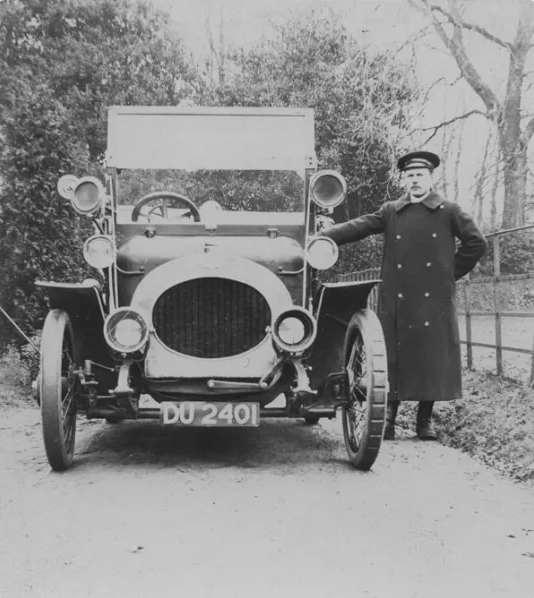
There is a recognisable sort of chap standing beside a very clean car outside a top hotel. He wears two principal things - a peaked cap, and an expression of professional, unbothered serenity. He opens the door. He inclines his head. He says "Sir" and "Madam" with the respectful deference of a fellow who has said it many times. And when you have spread yourself across the leather interiors, he glides you smoothly across town without, it seems, doing anything so vulgar as making a concerted effort.
He is a Chauffeur. But his job title is far less accurate than his Sat-Nav.
Because "Chauffeur" was not meant to mean "elegant man who drives around the privileged few." It doesn't come from any Greek word for steering, or gliding, or the Latin for holding doors open with quiet dignity.
It comes from the French everyday verb Chauffer - "to heat" - and its literal, unvarnished meaning is "one who heats."
A stoker. A fire-tender. "The fellow that shovels the coal, dahling"...
Your immaculately dapper driver, in other words, is named after the sweatiest job in the building.
To understand how this happened, we have reverse back down the driveway, to the dawn of the motorcar, when the horseless carriage was not yet even a status symbol. It was a mere rumour. People gossiped that it was noisy, filthy, and, in the very early days, crucially - steam-powered. It was alarming news, and barely made it under the respectable umbrella of "progress".
The earliest cars were essentially small locomotives that had wandered off the rails and into the middle of the road. And a steam engine - as anyone who has met one will tell you - does not simply go. It must be coaxed, fed, and above all heated. Someone had to build the fire, mind the boiler, carry the coal, watch the pressure, and generally perform the hot and technical alchemy of turning water into steam into forward motion.
That someone was the chauffeur.
Now and here is the bit I quite like... In those early days, the chauffeur was not a servant. He was a technical expert. The wealthy owner hadn't the faintest idea how the infernal machine worked, and much less intention of ever finding out. He wanted to get from A to B with his nose in the London Times, not buried in the instruction manual. So he engaged a man who understood boilers and pressure and the dark arts of combustion - a skilled and qualified engineer with coal under his fingernails - and this man was, in every meaningful sense, the one who made the damn thing go.
The owner merely sat there, looking vitally important. The chauffeur did the work. If the engine failed, it was his good name that suffered, his competence that was on the line, while the gentleman tapped his cane on the roof of the "road carriage" - as indeed they were called - and looked meaningfully at his pocket watch.
For a brief, glorious moment, the man with the dirty hands was indispensable, not decorative, not a by-product of wealth and position. The chap in question held all of the technical knowledge, giving him - for the fleetiest of fleeting moments, un-nerving power over their clueless-but-wealthy employers.
Yeah, ok... the Titanic moment - you know how this all ends...
Steam gave way to petrol. Petrol engines, ungratefully, did not require a fire to be lovingly built each morning. You cranked a handle and prayed to the motor Gods that the thing would simply start. And with that single mechanical convenience, the chauffeur's entire reason for existing, quietly evaporated. He no longer carefully heated platinum tubes, with a bunsen burner to fire up the Daimler steam engine. He was no longer the engineer, the scientist, the indispensable expert. He was the former carriage driver, newly converted from horses to horse power, with little skill required.
A pleasing footnote to the rich history of this common-enough word.. "Chauffeur" traces back through old French to the Latin calēre, "to be warm" which makes it a direct cousin of an English word we still use whenever something rubs us up the wrong way: chafe.
To chafe is, originally, to warm by rubbing. So the next time you are hobbled by the absolute luxury problem of an irritating chauffeur, you may console yourself that you are being chafed by a man whose job title is, quite literally, to do just that. This will not make the fare cheaper, but it may make the irritation easier to bear.
I suppose for me, the important bit is that the word stayed, like many still do. And that is reassuring, because it makes us look. And enquire.
Because it adds to our understanding. It rewards our curiosity with that lovely verbal fanfare of -
..."well I never knew that"...
On Platform 13, wholeness isn’t found - it’s remembered. Because loss is loss, worthiness is universal, and no one is alone. We are all in this together.


Comments