


Field Notes - The Bourgeois - A humble history.

Updated: Dec 10, 2025
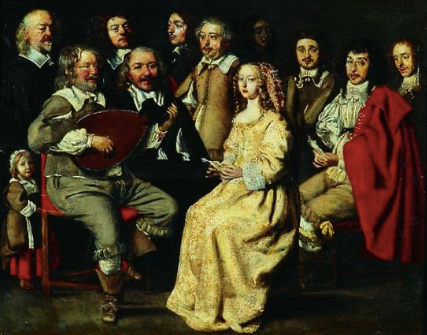
Once a simple word for a regular townsfellow, the term "bourgeois" has travelled through centuries of revolution, ridicule, and refinement. Its journey from common noun to common mirror, reflects our own uneasy juggle with progress and social aspiration. It is neither really a word of belonging, but perhaps more one that suggests "becoming". The hapless work of the sausage roll that wants to be a "Pork Wellington"...
Long before bourgeois became a petty insult, it was a mark of standing. A word stamped on charters and tax rolls, identifying the sturdy chaps of the bourg - the walled towns that rose quickly across medieval France. The bourgeois were not born to castles, nor tied to the work of fields. They were the ones who built town halls, markets, and village order - and, in doing so, modern France itself.
The first bourgeois were pragmatic revolutionaries: merchants, bakers, and bookkeepers who traded muscle for craft and land for literacy. Their walls didn’t separate; they protected. Inside those stone perimeters, France learned to read, to count, and to imagine beyond social rank. To be bourgeois was once to belong to progress itself — to trade, education, and civic life. It was the beginning of a very attractive mobility — social, intellectual, and moral.
But language, like most things, shifts with time and when power is applied. By the seventeenth century, the term bourgeois was no longer about where you lived, it was about how you did things. As the merchant class expanded their new piles of cash and influence, the idle nobility sniggered from the sidelines, using the word to label those who could buy all land they wanted, but never go shopping for a family tree. It said, you might have arrived, but you'll never belong.
Then came 1789 - the French Revolution. Oops.. The bourgeoisie pretty much paid for and encouraged the uprising - thinkers, lawyers, and merchants who tore down the crusty old order, in the name of all things liberty, equality and brotherhood. For a brief moment of flag waving, finger pointing and guillotine dropping, the bourgeois were the heroes of songs and stories. The aristocrats quickly stopped their sniggering.
And yet... revolutions, like corners, are quickly turned. Once power changed hands, the poor old bourgeois lost their halos and the whole darn demographic became shorthand for caution, conformity, and comfort. The class that had rebelled against privilege became accused of protecting it.
By the nineteenth century, bourgeois had grown two faces — and France adored hating both of them. The popuist writers of the day, Balzac, Flaubert and their literary cronies, either mocked or despised the nouveau riche-ness of the bourgeois class. To be bourgeois was to be the owner of nice curtains and newly purchased porcelain, the guardian of Sunday routines and decent opinion. It was the class of the known — reliable, unadventurous, proper.
And yet, ironically, it was the bourgeois who built the infrastructure of modern life: schools, banks, theatres, law courts, newspapers. The same instinct that dulled imagination also underwrote civilisation. This tension — between security and spirit — is what made the word immortal. The bourgeois became not just a class but a cautionary tale: The moment progress mistakes movement, for direction.
Today, bourgeois survives mostly as irony, softened into bobo — the bourgeois-bohème: an urban plodder, who buys organic wine, worships authenticity, and restores stone barns for leisure rather than livelihood. Yet every ironed, linen tablecloth, every meticulously casual dinner party, still carries a whisper of that old ambition — the longing to be civilised but sincere, comfortable yet cultured. The bourgeois never vanished; they simply learned to disguise themselves in good taste.
What makes bourgeois so revealing is not its classism but its self-awareness. It’s a mirror France holds to itself — one that asks, generation after generation: Do we live for meaning or for appearance? For creation or preservation? For belonging or display? It’s a word that warns what happens when enough quietly becomes too much.
Every culture has its version of bourgeois — the moment when aspiration curdles into maintenance. But in France, where comfort is always slightly suspect and style is pure survival, bourgeois remains the most elegant of insults: a reminder that refinement without curiosity is merely decoration.
Perhaps that’s why the word endures. It began as a mark of freedom and became a lesson in restraint. Because every wall, once built to protect, risks keeping something wild out. And somewhere between the stone of the bourg and the silk of the salon lies the eternal question of French life — and perhaps of all human life: How do we live beautifully without becoming driven by the need to aspire to something we are not?
Vive la différence..


Comments