


Quince Jelly by Chef Wiet Wauters

Updated: Nov 23, 2025
Hello to Platform 13 and to their dedicated readers...

So a brief intro to me... I am first and foremost a food lover. Originally from Antwerp in Belgium, I trained as a chef in the culinary schools of France, but the kitchen garden is where I feel most at home. All that is cooking for me and for my partner Kris, is about love, feeding our guests, friends and family with the goodness of our adopted French seasons. Simple stuff, done with love.
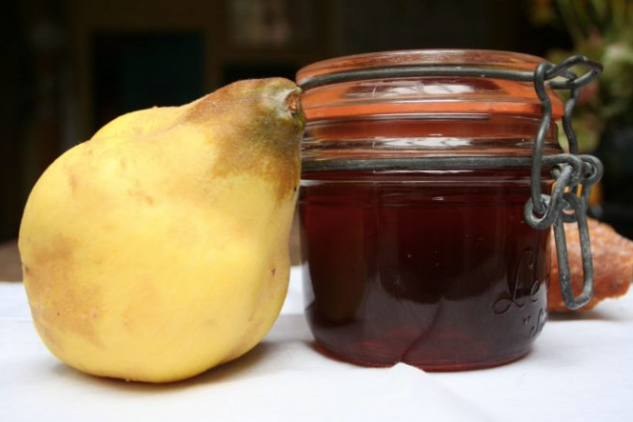
Every season gives us something, even the darker months at this chilly time of year. November is when our Quince tree is almost bent double by the weight of its fruits. In our larder, we still have a few jars of the "Membrillo" - the Spanish version of quince jelly - from 2 years ago. It is a delicious and coarse sweetmeat that is perfect with smoky cheese, game dishes or simply added to gravy. A little bit goes a long way, and we also use our annual crop of Qunices for jams and also home-made Gin. It has masses of natiral pectins, sugars and is perfect for cooking and jarring.
What you'll need...
1.5 kg or thereabouts of raw, ripe quince
900g of preserving sugar
Sugar pectin (3 fl. oz or so)
Oranges, lemons, cinnamon if you like it,
Muslin cloth for straining
2 Saucepans
Sterilised jam jars (just boil the jars and lids in water for 5 minutues)
Patience

We start by cleaning the quince with a stiff brush. Unless they have fallen into a muddy puddle, it is not too much work. Cut the fruits into 4 pieces, leaving the stones where they are. Cooking the Quince 'stones-in' will provide a pleasant tannin 'bitterness' that will be an important addition of cooked balance. Place the wedges into a large saucepan and cover with water to the top of the cut fruit. Add the juice of 2 large lemons and cook on a simmer for 2 to 3 hours. The longer they cook, the deeper rosy red the juice will become. Be not afraid.. You could also chose to add a cinamon stick for a Christmas kick, or a thumb of ginger, some orange zest.. whatever floats your boat. When you are happy, let it all cool down to room temperature.
Take another saucepan (I am going to assume you have two) and drape a sheet of muslin cloth over the pan, to completely line it. Spoon in your cooked fruit, collect the edges of the muslin and shape it into a ball that you can squeeze very gently, releasing all the juice - as that is the only part you now want.
You can now weigh the resulting juice and add a sugar pectin. Although Quinces conatin plenty of natural pectins, you are looking for a really firm jelly that cuts with a knife, rather than ending up with a soft, spoony jam. I use a 1:2 ratio pectin, but for simplicity, a good guide is 3 fl. oz of liquid pectin for every 3 pounds of cooked quinces.

Simmer the juice on a low heat for 20 minutes or so, tying a muslin bag into the saucepan with some orange or lemon zest, skimming off any foam that forms. so your jelly will be clear and bright when set. You will need to keep stirring the juice as it simmers, so the sugar pectin doesn't burn in the pan.
Pour the cooked liquid into pre-sterilised jars and screw on the lids. When cool enough to handle, turn the jars upside down and let them sit for 20 minutes. Turn them right-side up and voilà. They can be stored away in a shady corner of your pantry for 6 months or more.

I hope you get hold of some quince fruits and go the distance with this recipe. It seems like work, but the kitchen is the heart of your home, so time spent there in the service of the months ahead, is so worth it.. Bon appétit..


Comments