


A Hymn to the Quince

Updated: Oct 28, 2025

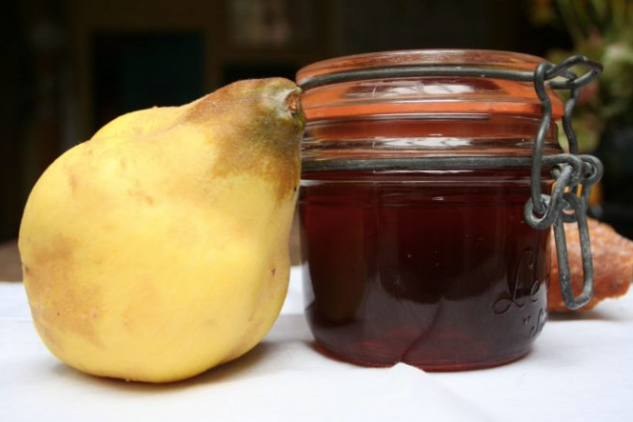
Golden apples. The asteroid-like quince is the last fruit to ripen - the one that waits until the year breathes out. Hard and bitter when raw, it softens only through patience and care. Once sacred to Aphrodite, it remains a quiet symbol of transformation: if you take your time, you'll get your reward. It's not the best looking fruit in the orchard, but nature is not so bothered with looks. Perfect imperfection is sometimes just right.
The quince is a golden relic of autumn that hangs on the branch long after apples and pears have gotten too tired to hang on. When raw, they are as hard and chewy as a nightclub doorman, but when gentle heat is applied through a patient poach, they soften slowly, releasing a perfume that once scented whole salons.
Native to Iran and Anatolia, the quince travelled westward with early cultivation - one of the very first fruits domesticated by humans. The ancient Greeks knew it well: they called it kydonion melon, the “apple of Kydonia,” named for the city of Chania in Crete.
It was sacred to Aphrodite, the goddess of love and fertility. The “golden apple” that Paris offered to her - the fateful gift that sparked the Trojan War - was likely a humble quince. Greek brides would nibble one before entering the bridal chamber, both for fragrance and as a symbol of sweetness to rival our own "honey moons"
The Romans adopted the fruit too, preserving it in honey and spicing it with cloves and pepper - an early (and delicious sounding) version of marmalade. When it reached medieval Europe, the quince became a fruit of refinement, appearing in the still rooms of monasteries and the courts of queens.
Through centuries, the quince has carried meanings that transcend its form: love, fertility, wisdom, patience, and transformation. It is a fruit that must be cooked to reveal its nature - a metaphor that poets and philosophers have dined out on. What begins as hard and weapon-like, becomes tender and perfumed - with care. Even its colour — going from pale yellow to rose-gold when poached — speaks of metamorphosis. It is a fruit that teaches that not everything good is instant, and not all beauty is as we find it.
Medicinal & Traditional Uses
In ancient and medieval medicine, quince was valued as both tonic and remedy.Greek physicians like Hippocrates swore by it for fevers and as a digestive aid; later, Galen praised it for calming the stomach. Its high pectin and tannin content made it useful for treating diarrhoea and inflammation.
Infusions of quince seeds were used as soothing gels for burns, coughs, and sore throats - even in cosmetics, for softening the skin. In folk medicine across Persia and the Mediterranean, quince syrup was believed to lift the heart, steady the nerves, and chase away sadness.
In short: the quince was thought to comfort the spirit as much as the body — a sentiment that feels as true now as it did then.
Closing Reflection
Quince is, in every sense, a fruit of becoming. It rewards patience, invites slowness, and transforms through attention - much like the end of the year itself. As the final harvest before winter, it reminds us that sweetness is often the product of time, and that even the toughest skins hold fragrance waiting to be revealed.
They say an apple a day keeps the doctor away. The quince prefers diplomacy: it keeps the doctor curious, the cook patient and a smug grin on the face of the one who makes the marmalade.
Culinary Alchemy
Quinces resist haste. Raw, they’re sour and fibrous — but under slow heat, they transform, turning pink, then amber, then almost ruby. Their flavour is the love-child of an apple and a pear that has fallen into a rose bush - complex, honeyed, faintly floral.
Across cultures, quinces appear as:
Membrillo (Spain): a dense quince paste to be paired (without fail) with Manchego cheese.
Pâte de Coing (France): the elegant cousin of membrillo, often dusted with sugar and gifted at Christmas, instead of socks.
Quince Jelly: once a pantry staple in rural Europe, prized for clarity and shiny beauty.
Persian Khoresht-e Beh: a fragrant stew of quince, lamb, and saffron — sweet and savoury in perfect balance. I am salivating.
NUTRITION PROFILE | Quince (Cydonia oblonga)
Energy: 57 kcal
Water: 83 g
Carbohydrates: 15.3 g – Sugars (primarily fructose & glucose): 12 g
Dietary fibre: 1.9 g (raw) → 4–6 g when cooked and the natural pectin concentrates
Protein: 0.4 g
Fat: 0.1 g
HEALTH INSIGHT
Digestive Support – High pectin and tannin levels act as natural demulcents, soothing the gut lining and stabilising bowel function.
Anti-Inflammatory Action – Polyphenols down-regulate NF-κB signalling, linked to lower markers of chronic inflammation.
Respiratory Relief – Quince-seed mucilage forms a protective gel for throat and airways; still used in traditional Iranian medicine for coughs and bronchial irritation.
Cardiometabolic Benefits – Animal and small human trials show improved lipid profiles and reduced oxidised LDL after regular quince intake.
Glycaemic Balance – Moderate GI (~35–40 when poached); soluble fibre slows absorption of sugars.
A Jam for all Seasons - Chef Wiet Wauters Quince Jelly recipe


Comments